
PIPE & EQUIPMENT INSULATION JACKETING
Aluminum Jacket for Pipe Insulation
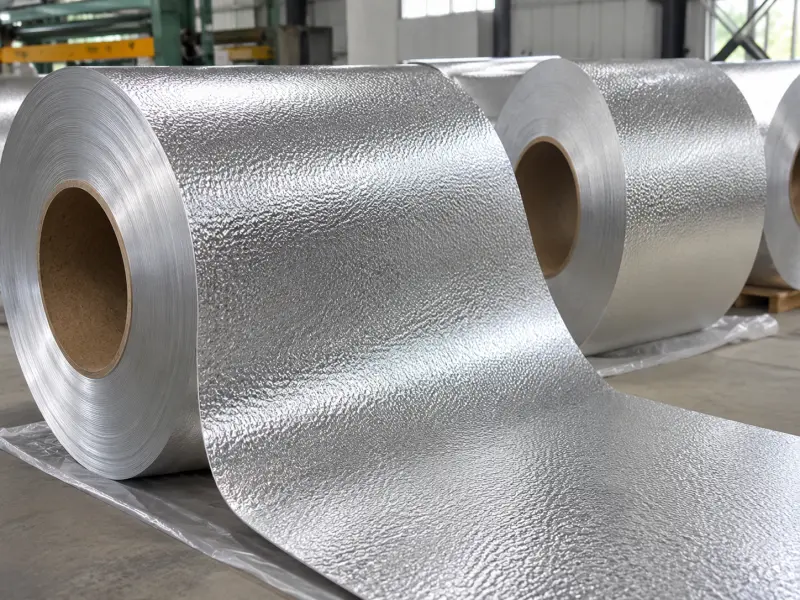
Protect insulated pipes from weather and handling damage. Choose smooth, stucco embossed, or coated aluminum with a suitable moisture barrier.
0.3–1.0
Gauge mm
600–1220
Width (mm)
Coil / Sheet
Formats
Reference ranges. Confirm the alloy, temper, and available combinations.
Finishes · Alloys · Applications · Specifications · Sizing · Quote
Why Choose Aluminum Insulation Jacketing?
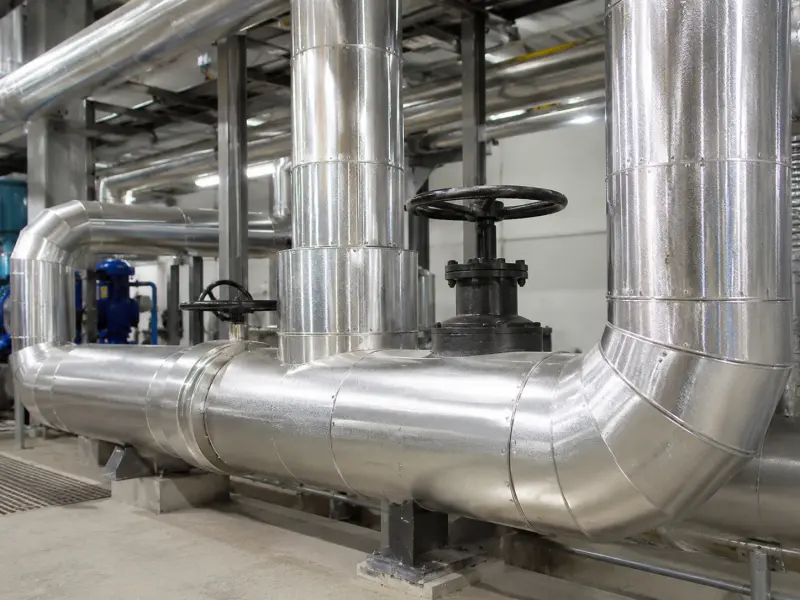
A lightweight outer covering for a properly designed insulation system.
01 Weather Protection
Helps shield insulation from rain and sunlight. Correct seams and overlaps are essential.
02 Easy Fabrication
Cut and form rolls or sheets around straight pipes and equipment.
03 Finish Options
Choose smooth, embossed, or coated surfaces for the project.
Alloy Selection Guide
Match the alloy and temper to the environment, forming process, and project specification.
1100 / 1060
General Jacketing
Easy forming for general insulation covers. Confirm strength and project requirements.
3003
Industrial Use
A balance of formability and strength for industrial jacketing.
3105
Coated Jacketing
Consider for coated products. Match substrate and coating to the forming route.
5052
Demanding Conditions
Higher strength and good corrosion resistance. Confirm the complete system design.
Types of Aluminum Jacket for Pipe Insulation
Smooth Aluminum Jacketing
Smooth aluminum jacketing has a flat surface. It is suitable for pipe insulation systems where a clean appearance and easier surface cleaning are required.
It is commonly used for industrial pipelines, equipment covers, and HVAC systems.
Stucco Embossed Aluminum Jacketing
Stucco embossed aluminum has an irregular textured surface.
The pattern helps hide minor scratches and handling marks. It is widely used for outdoor pipe insulation and industrial equipment cladding.
Polykraft Aluminum Jacketing
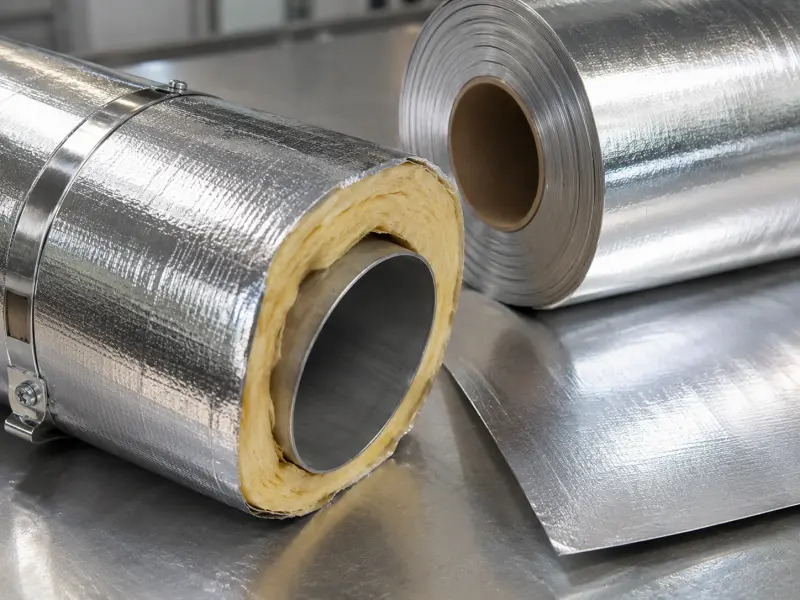
Polykraft aluminum jacketing has a laminated moisture barrier on the inner surface.
The barrier helps separate aluminum from wet insulation and can reduce the risk of moisture-related corrosion when correctly specified and installed.
Color Coated Aluminum Jacketing
Color coated aluminum jacketing has a protective or decorative coating.
It is suitable for selected projects requiring color identification, decorative appearance, or additional surface protection.

Smooth vs. Stucco Embossed Aluminum Jacketing
| Feature | Smooth Aluminum | Stucco Embossed |
|---|---|---|
| Surface | Flat | Textured |
| Appearance | Plain | Patterned |
| Scratch Visibility | More noticeable on some finishes | Often less noticeable |
| Cleaning | Easier | More attention required |
| Forming | Generally predictable | Pattern-dependent |
| Common Use | HVAC, equipment | Industrial pipe insulation |
Both finishes can protect insulated pipes. The best choice depends on the installation environment and appearance requirements.
Choose Smooth Jacketing
→ Clean, plain appearance
→ Easier surface cleaning
→ General HVAC and equipment covers
Choose Stucco Embossed
→ Textured surface appearance
→ Helps hide minor handling marks
→ Outdoor and industrial cladding
Aluminum Alloys for Pipe Insulation Jackets
Different aluminum alloys offer different mechanical properties and corrosion resistance.
| Alloy | Main Property | Typical Application |
|---|---|---|
| 1050 | High aluminum purity | General insulation covering |
| 1060 | Good formability | Lightweight jacketing |
| 1100 | Good workability | Pipe and equipment covers |
| 3003 | Higher strength than 1xxx alloys | Industrial jacketing |
| 3105 | Good forming properties | Coated jacketing |
| 5052 | Higher strength and good corrosion resistance | Demanding industrial conditions |
1100 vs. 3003 Aluminum Jacketing
1100 aluminum is easy to form and suitable for general pipe insulation covering.
3003 aluminum contains manganese and provides higher strength than 1100 in comparable tempers.
For industrial insulation systems, 3003 is a common choice when greater mechanical strength is needed.
3003 vs. 5052 Aluminum Jacketing
3003 offers a balance of workability and strength.
5052 provides higher strength and good corrosion resistance. It may be selected for more demanding environments, subject to the complete system design.

Aluminum Jacket for Hot Pipe Insulation
Hot industrial pipelines require protective cladding over the insulation layer.
Aluminum jacketing is used in:
- Steam pipelines
- Boiler piping
- Power plant systems
- Chemical processing equipment
- Industrial heating lines
The aluminum covering protects the insulation system but is not the main thermal insulation material.
For high-temperature applications, the complete system must be designed for operating temperature, thermal movement, and corrosion conditions.
Aluminum Jacket for Cold Pipe Insulation
Cold pipes require careful moisture and vapor control.
Aluminum jacketing is used as an outer protective covering over a properly designed insulation and vapor barrier system.
Common applications include:
- Chilled water pipes
- Refrigeration pipelines
- Cold storage facilities
- HVAC cooling systems
- Industrial cooling equipment
Why Is Moisture Protection Important?
Moisture entering the insulation can reduce thermal performance and contribute to corrosion beneath the covering.
Seams, joints, penetrations, and vapor barriers must be designed and sealed correctly.
Aluminum Pipe Insulation Jacketing Specifications
| Specification | Common Options |
|---|---|
| Product | Aluminum insulation jacketing |
| Alloy | 1050, 1060, 1100, 3003, 3105, 5052 |
| Temper | H14, H24, H32 |
| Thickness | 0.3–1.0 mm |
| Width | 600–1220 mm |
| Surface | Smooth, stucco embossed |
| Finish | Mill finish, coated |
| Moisture Barrier | Polykraft, polyethylene film, other systems |
| Supply Form | Coil, roll, cut sheet |
| Application | Pipe and equipment insulation |
These are reference specifications. Available combinations depend on the supplier and project requirements.
Aluminum Jacketing Thickness Guide
Thickness affects rigidity, handling, weight, and resistance to mechanical damage.
| Thickness | Typical Application |
|---|---|
| 0.3 mm | Light-duty insulation covering |
| 0.4 mm | Small pipe jacketing |
| 0.5 mm | General industrial pipes |
| 0.6 mm | Medium-duty insulation covering |
| 0.8 mm | Larger pipes and equipment |
| 1.0 mm | Heavy-duty protective cladding |
These are general examples. Actual thickness requirements should follow project specifications, pipe dimensions, and applicable insulation standards.
0.4 mm vs. 0.6 mm Aluminum Jacketing
0.4 mm aluminum is lightweight and suitable for selected small-diameter pipe systems.
0.6 mm aluminum provides greater rigidity and resistance to handling damage.
0.6 mm vs. 0.8 mm Aluminum Jacketing
The 0.6 mm aluminum is a practical choice for many industrial insulation projects.
0.8 mm aluminum may be preferred for larger equipment or areas with greater mechanical exposure.
Aluminum Jacketing Temper Comparison
Temper affects the hardness and forming behavior of the aluminum.
| Temper | Condition | Main Feature |
|---|---|---|
| H14 | Half-hard | Balanced strength and formability |
| H24 | Half-hard, partially annealed | General sheet fabrication |
| H32 | Quarter-hard, stabilized | Used with suitable 5xxx alloys |
H14 vs. H24 Aluminum Jacketing
Both H14 and H24 are nominal half-hard conditions, but they are produced by different processing methods.
The selection depends on alloy, bending requirements, and mechanical properties.
H24 vs. H32 Aluminum Jacketing
H24 is used with certain 1xxx and 3xxx alloys.
H32 is a stabilized temper used with suitable alloys such as 5052.
The alloy and temper should always be specified together.
Polykraft vs. Bare Aluminum Jacketing
| Feature | Polykraft Backed | Bare Aluminum |
|---|---|---|
| Inner Barrier | Laminated backing | None |
| Moisture Separation | Additional layer | Depends on system |
| Corrosion Protection | Can reduce contact-related risks | Requires suitable design |
| Cost | Usually higher | Usually lower |
| Common Use | Industrial insulation | General jacketing |
Is Polykraft Aluminum Better?
Polykraft backing can provide additional separation between the aluminum and insulation.
However, it does not replace the need for proper joint sealing, drainage, and moisture management.
Aluminum vs. Stainless Steel Pipe Jacketing
Both materials are used for industrial insulation cladding.
| Feature | Aluminum | Stainless Steel |
|---|---|---|
| Weight | Lightweight | Heavier |
| Formability | Good | Depends on grade |
| Corrosion Resistance | Good in suitable environments | Often better in demanding environments |
| Material Cost | Often lower | Often higher |
| Common Use | General industrial insulation | Harsh industrial environments |
Aluminum is a practical option for many insulation projects.
Stainless steel may be preferred where project conditions require greater resistance to specific corrosive environments or mechanical damage.
How to Calculate Aluminum Jacket Size for Pipes
The jacket must fit around the insulation, not just the bare pipe.
The approximate outside diameter of the insulated pipe is:
Insulated Diameter = Pipe Outside Diameter + 2 × Insulation Thickness
The approximate jacket circumference is:
Jacket Circumference = π × Insulated Diameter
Example: Aluminum Jacket for a 100 mm Pipe
| Parameter | Value |
|---|---|
| Pipe Outside Diameter | 100 mm |
| Insulation Thickness | 50 mm |
| Insulated Outside Diameter | 200 mm |
| Calculated Circumference | 628 mm |
| Example Overlap Allowance | 50 mm |
| Approximate Jacket Cut Width | 678 mm |
This example assumes the specified 100 mm is the actual pipe outside diameter. Nominal pipe sizes may have different outside diameters.
The final cut width must account for overlaps, fastening methods, and installation tolerances.
Aluminum Pipe Jacketing Weight per Square Meter
The approximate weight of flat aluminum can be calculated using:
Weight (kg/m²) = Thickness (mm) × 2.7
| Thickness | Approximate Weight |
|---|---|
| 0.3 mm | 0.81 kg/m² |
| 0.4 mm | 1.08 kg/m² |
| 0.5 mm | 1.35 kg/m² |
| 0.6 mm | 1.62 kg/m² |
| 0.8 mm | 2.16 kg/m² |
| 1.0 mm | 2.70 kg/m² |
These values exclude moisture barriers, coatings, fasteners, and packaging.
How to Choose Aluminum Jacketing for Pipe Insulation
Identify the Pipe Insulation System
Hot Pipes
Heat and expansion requirements
Cold Pipes
Moisture and vapor control
Outdoor Pipes
Weather and joint protection
Industrial Equipment
Rigidity and fabrication
Choose Alloy → Temper → Thickness
Select Surface → Moisture Barrier → Sheet Width
Confirm Project Specifications and Order
Aluminum Pipe Jacketing Price Factors
The price depends on the material specification and processing requirements.
| Factor | Influence |
|---|---|
| Alloy | Material cost |
| Thickness | Metal consumption |
| Surface Finish | Embossing or coating cost |
| Moisture Barrier | Additional lamination cost |
| Sheet Width | Cutting and processing |
| Order Quantity | Unit production cost |
| Packaging | Export protection |
Is Stucco Embossed Aluminum More Expensive?
Stucco embossing adds a processing step, so it may cost more than comparable smooth mill finish aluminum.
However, the final price depends on alloy, thickness, backing, and order quantity.
Frequently Asked Questions
Common questions about aluminum pipe insulation jacketing
What Is Aluminum Jacketing for Pipe Insulation?
It is a protective aluminum covering installed over pipe insulation to protect the insulation system from physical and environmental damage.
What Thickness Is Used for Aluminum Pipe Jacketing?
Common thicknesses include 0.4 mm, 0.5 mm, 0.6 mm, and 0.8 mm. The correct thickness depends on project specifications.
Is 3003 Aluminum Suitable for Pipe Insulation?
Yes. 3003 aluminum is commonly used for industrial insulation jacketing because it offers good formability and higher strength than 1xxx alloys.
What Is Stucco Embossed Aluminum Jacketing?
It is aluminum jacketing with a textured surface that can help hide minor scratches and handling marks.
What Is Polykraft Aluminum Jacketing?
It is aluminum jacketing with a laminated moisture barrier on the inner surface.
Can Aluminum Jacketing Be Used Outdoors?
Yes, when the alloy, thickness, joints, and installation system are suitable for the environment.
Does Aluminum Jacketing Provide Thermal Insulation?
The jacket itself provides little thermal resistance. The main insulation performance comes from the insulation material beneath it.
Can Aluminum Jacketing Be Used for Cold Pipes?
Yes. Cold pipe systems require a suitable vapor barrier and moisture-control design.
What Is the Difference Between Aluminum and Stainless Steel Jacketing?
Aluminum is lighter and often less expensive. Stainless steel may be preferred for certain demanding environments.
Can I Order Custom Aluminum Jacketing Widths?
Custom widths and cut lengths may be available depending on production equipment and order quantity.
Buy Aluminum Jacket for Pipe Insulation in Bulk
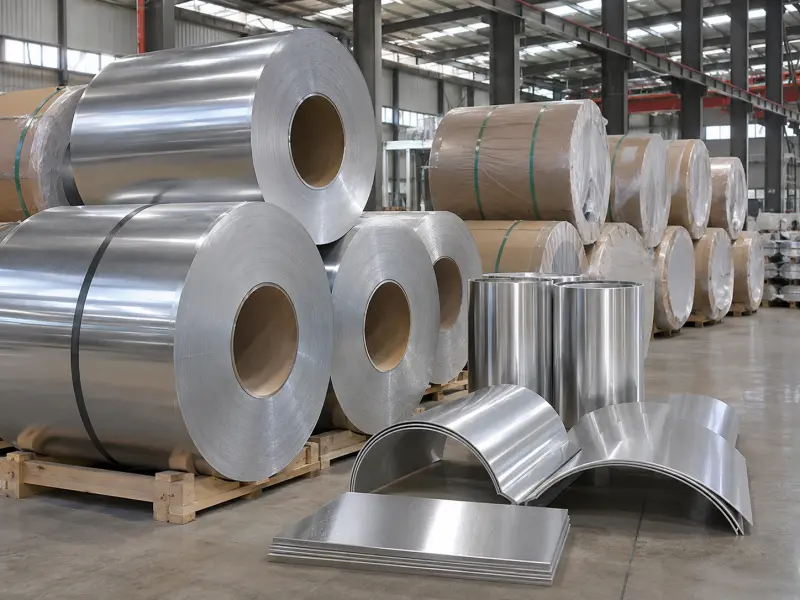
Aluminum insulation jacketing is available in coils, rolls, and cut sheets for industrial insulation contractors and equipment manufacturers.
| Quotation Example | Requirement |
|---|---|
| Product | Aluminum pipe insulation jacketing |
| Alloy | 3003 |
| Temper | H14 |
| Thickness | 0.5 mm |
| Width | 1000 mm |
| Surface | Stucco embossed |
| Backing | Polykraft |
| Quantity | 10 tons |
| Packaging | Export pallets |
For an accurate quotation, provide the alloy, temper, thickness, width, surface finish, moisture barrier, quantity, and destination port.
Contact us to request aluminum jacketing specifications, available sizes, sample information, and wholesale pricing for your pipe insulation project.
Ready to specify your pipe insulation jacket?