
ALUMINUM PLATE FOR FABRICATION
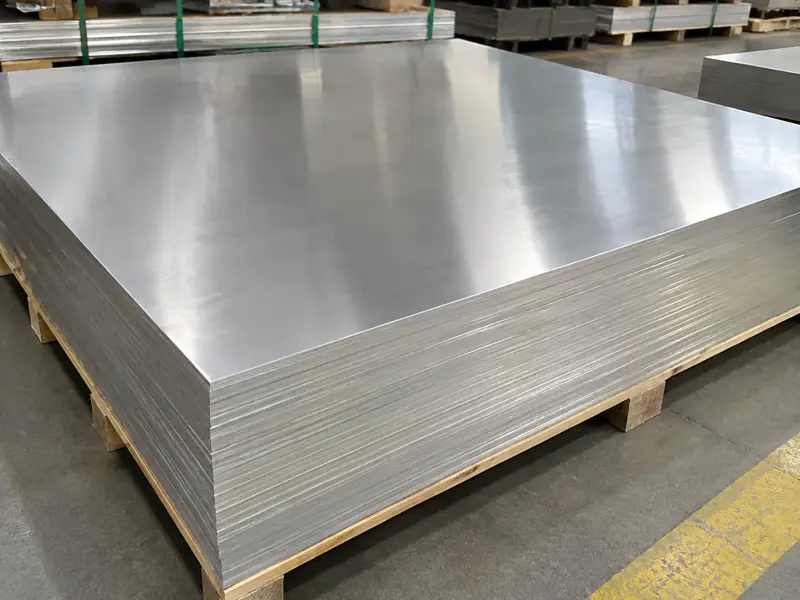
5052 Aluminum Plate
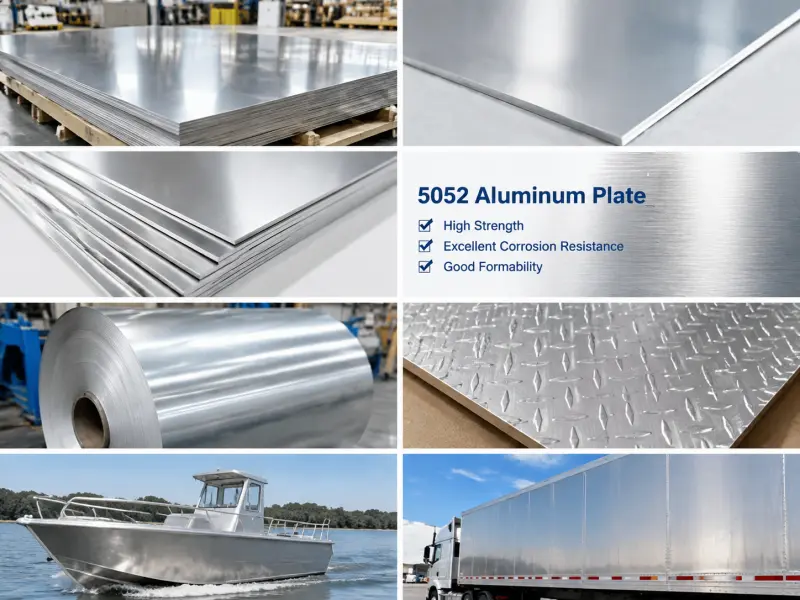
Corrosion-resistant aluminum for formed parts, tanks and outdoor components. Compare tempers, sizes and fabrication requirements before ordering.
5052
Al-Mg Alloy
O / H32
Forming Options
H34
Higher Strength
Compare · Tempers · Thickness · Product Types · Applications · FAQ
Advantages and Benefits
Corrosion Resistance
Suitable for many humid and outdoor applications. Confirm the service environment.
Formability
O and H32 are useful starting points for formed parts.
Weldability
Choose the welding procedure and filler for the joint design.
Low Weight
Reduce component weight compared with many steel alternatives.
Surface Options
Specify mill finish, protective film or further finishing.
Cut-to-Size Supply
Provide dimensions, tolerances and drawings for repeat parts.
Surface and Plate Details
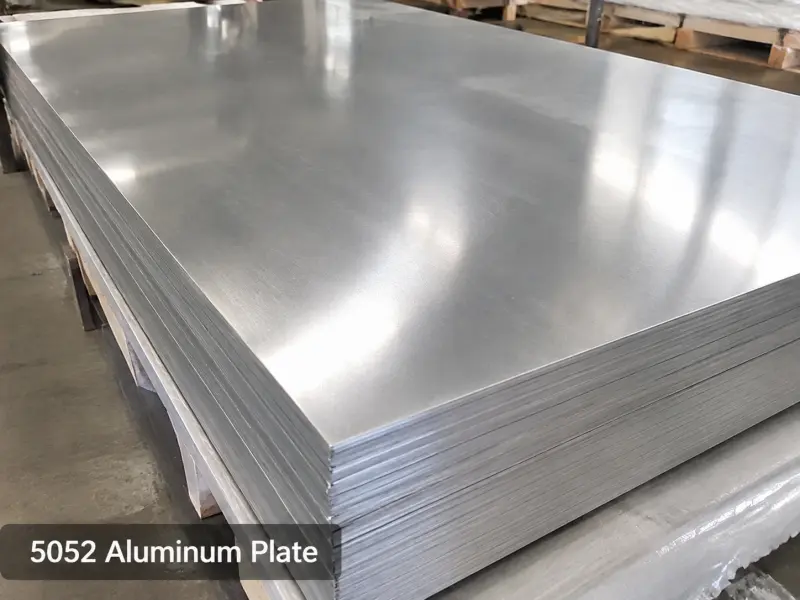
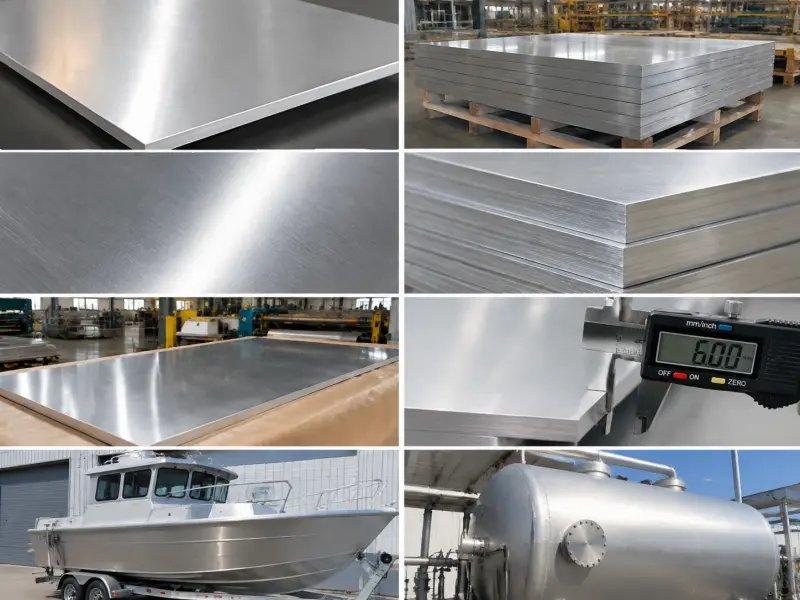
Flat Plate
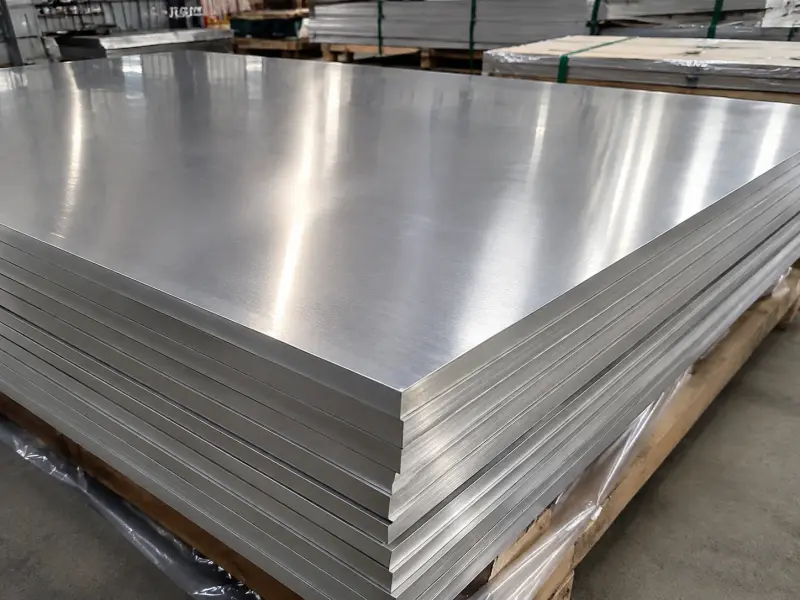
Stacked Plate
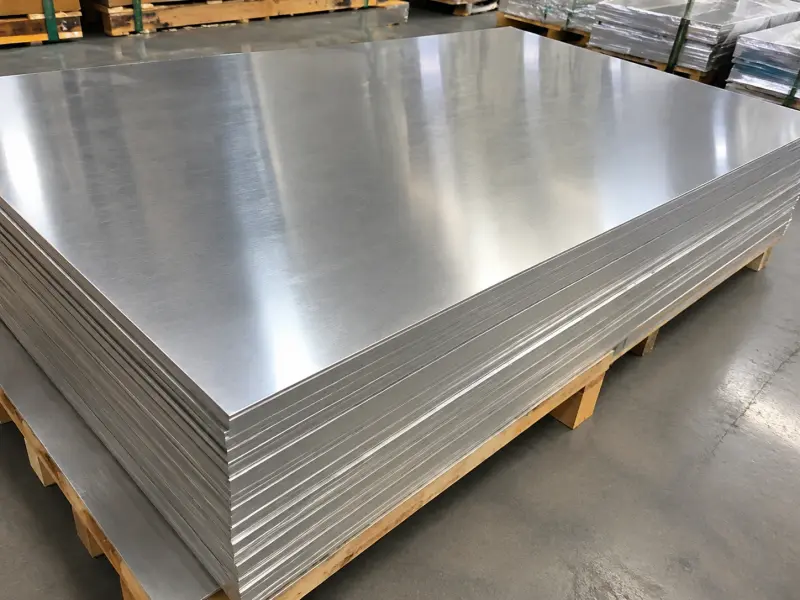
Mill Finish Surface
Quick Temper Selection
O Temper
Deep forming and curved parts. Confirm bend radius and tooling.
H32 Temper
A balance of forming and strength for general fabrication.
H34 Temper
Higher strength with more attention to bending requirements.
Comparison Tables for 5052 Plate
Many buyers compare 5052 with other grades. The tables below show the main differences. Use them to pick the grade that fits your project.
5052 Versus Other Common Aluminum Grades
| Feature | 5052 | 6061 | 3003 | 1100 |
|---|---|---|---|---|
| Main alloy element | Magnesium | Magnesium and silicon | Manganese | Almost pure |
| Strength | Medium to high | High | Medium | Low |
| Corrosion resistance | Excellent | Good | Very good | Excellent |
| Weldability | Excellent | Good | Good | Excellent |
| Bending | Very good | Moderate | Very good | Excellent |
| Marine use | Very common | Less common | Some | Limited |
| Cost | Medium | Medium to high | Low to medium | Low |
5052 Temper Comparison by Use
| Need | Best Temper | Reason |
|---|---|---|
| Deep forming | O | Softest and easiest to shape |
| General work | H32 | Balanced strength and forming |
| Marine parts | H34 | Stronger with good corrosion resistance |
| Structural strength | H36 or H38 | Higher strength for load bearing |
The 5052 Plate Thickness Comparison by Product
| Product | Thin Option | Standard Option | Heavy Option |
|---|---|---|---|
| Boat deck panel | 3 mm | 6 mm | 8 mm |
| Fuel tank wall | 6 mm | 8 mm | 10 mm |
| Machine base | 10 mm | 15 mm | 20 mm |
| Truck bed | 3 mm checkered | 4 mm checkered | 6 mm checkered |
| Structural bracket | 6 mm | 10 mm | 15 mm |
Mill Finish Versus Brushed Finish
| Finish | Look | Surface Care | Best Use |
|---|---|---|---|
| Mill finish | Dull, even | Basic cleaning | General parts and tanks |
| Brushed | Fine lines, smooth | Easy to clean | Marine and visible parts |
| Polished | Shiny | Needs regular care | Decorative panels |
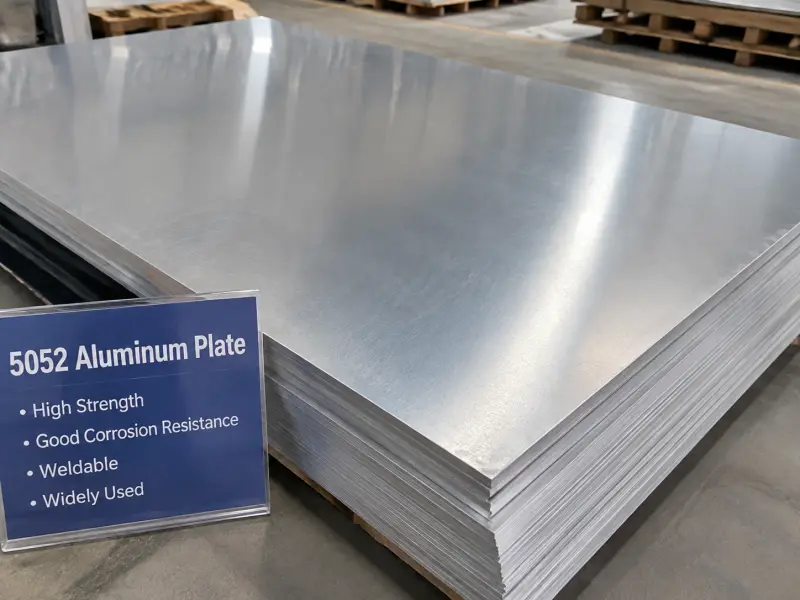
What Makes 5052 Aluminum Plate Special
5052 belongs to the 5000 series. These alloys use magnesium as the main added metal. Magnesium gives the plate good strength without making it hard or brittle. Chromium is also added in small amounts to help resist corrosion.
Key Traits at a Glance
- Good resistance to salt water and humid air
- Strength that is higher than 1060 and 3003
- Easy to weld with common methods
- Good forming and bending results
- Light weight for its strength
Why Buyers Choose 5052 Over Other Grades
Many buyers start with a basic question. Which grade lasts longer in a wet place? In most cases, 5052 is the answer. It holds up better than softer grades in salt spray. It is also stronger than 3003. For this reason, it is common in marine and transport work.
5052 Alloy Composition
The alloy mix sets the basic character of the plate. The table below shows typical limits for 5052. Exact values follow the standard your mill uses, so always check the mill certificate.
| Element | Typical Content | Role in the Alloy |
|---|---|---|
| Magnesium (Mg) | 2.2% to 2.8% | Main strength element |
| Chromium (Cr) | 0.15% to 0.35% | Improves corrosion resistance |
| Iron (Fe) | Up to 0.45% | Trace element |
| Silicon (Si) | Up to 0.25% | Trace element |
| Copper (Cu) | Up to 0.10% | Kept low for corrosion resistance |
| Zinc (Zn) | Up to 0.10% | Kept low for corrosion resistance |
| Aluminum (Al) | Remainder | Base metal |
What the Alloy Means in Real Use
Magnesium helps the plate stay strong after forming. Chromium helps it resist pitting. Low copper and zinc keep the surface stable in salt air. These points matter most for boats, fuel tanks, and outdoor structures.
Temper Options for 5052 Plate
Temper describes how the metal was worked or heat treated. For 5052, the most common tempers are O, H32, H34, H36, and H38. The letter H means strain hardened. For H3x tempers, 3 indicates strain hardening and stabilization. The final digit indicates the degree of strain hardening.
Temper Comparison Table
| Temper | Strength Level | Bending | Weldability | Typical Use |
|---|---|---|---|---|
| O | Lowest | Excellent | Good | Deep forming and drawn parts |
| H32 | Medium | Very good | Good | General fabrication and tanks |
| H34 | Medium high | Good | Good | Marine parts and frames |
| H36 | High | Moderate | Good | Structural parts |
| H38 | Highest | Limited | Good | Strong, stiff components |
| H112 | Medium | Good | Good | Plate as rolled, common in mill stock |
Typical Strength Values
The numbers below are approximate. They help you compare tempers. Your mill test report gives the exact values for each lot.
| Temper | Tensile Strength (MPa) | Yield Strength (MPa) | Elongation |
|---|---|---|---|
| O | 170 to 215 | About 65 minimum | High |
| H32 | 230 to 270 | About 190 minimum | Good |
| H34 | 260 to 300 | About 210 minimum | Good |
| H36 | 290 to 330 | About 230 minimum | Moderate |
| H38 | 305 to 345 | About 250 minimum | Lower |
Picking the Right Temper
- Need to form deep curves: Choose O
- Need general strength and bending: Choose H32
- Need stronger parts for marine use: Choose H34 or H36
- Need high stiffness: Choose H38
H32 is the most common choice for general fabrication. It offers a good mix of strength and forming ease.
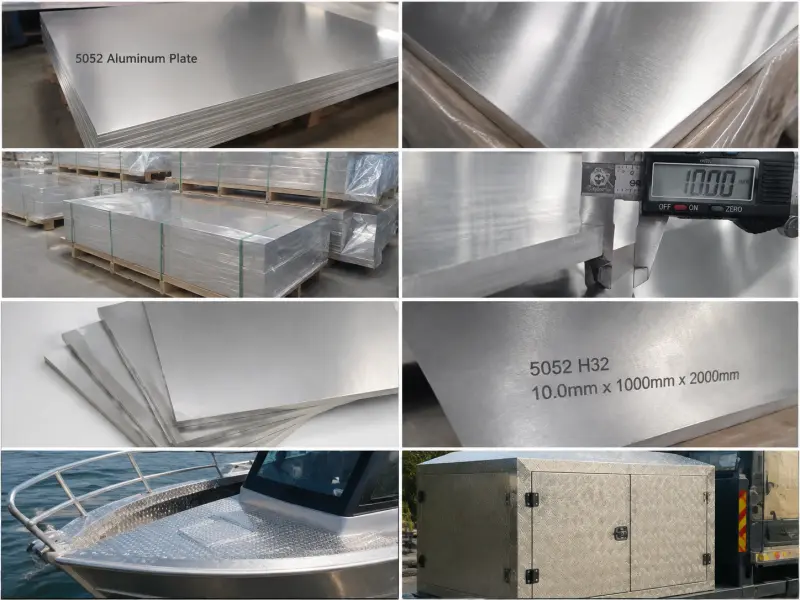
Thickness and Plate Range
In the metal trade, plate usually means a thickness of 6 mm (about 0.250 inch) or more. Thinner material is often called sheet. The plate range for 5052 is wide. Thick plates suit structural parts. Thin plates suit tanks, covers, and panels.
Thickness Chart
| Thickness (mm) | Thickness (inch) | Feel | Common Uses |
|---|---|---|---|
| 6 | 0.250 | Firm plate | Small brackets and marine panels |
| 8 | 0.315 | Solid | Boat parts and tank walls |
| 10 | 0.394 | Heavy | Frames and bases |
| 12 | 0.472 | Very heavy | Structural parts |
| 15 | 0.591 | Rigid | Machine parts and platforms |
| 20 | 0.787 | Thick | Heavy-duty bases |
| 25 | 0.984 | Very thick | Industrial equipment |
| 30 | 1.181 | Extra thick | Heavy machine parts |
How Thickness Changes Your Choice
Thicker plate is stronger but heavier. It also costs more to cut and move. Thin plate is easier to form and ship. Choose the thinnest plate that still meets the load needs of your project.
Standard Sizes and Product Forms
5052 plate comes in many sizes. Common mill sizes make ordering easier. Custom sizes are possible for large orders.
Common Plate Sizes
| Size (mm) | Size (feet) | Common Use | Typical Thickness Range |
|---|---|---|---|
| 1220 x 2440 | 4 x 8 | General fabrication | 6 mm to 25 mm |
| 1500 x 3000 | 5 x 10 | Large panels and tanks | 6 mm to 30 mm |
| 1500 x 6000 | 5 x 20 | Long marine and structural parts | 6 mm to 25 mm |
| 2000 x 4000 | 6.5 x 13 | Heavy plates | 10 mm to 30 mm |
Cut-to-Size Options
- Cut-to-length: Plate cut to a set length from a coil or sheet stock
- Cut-to-size: Plate cut to exact width and length
- Blanks: Pre-cut shapes for fast assembly
- Drilled plate: Holes added for bolts or mounting
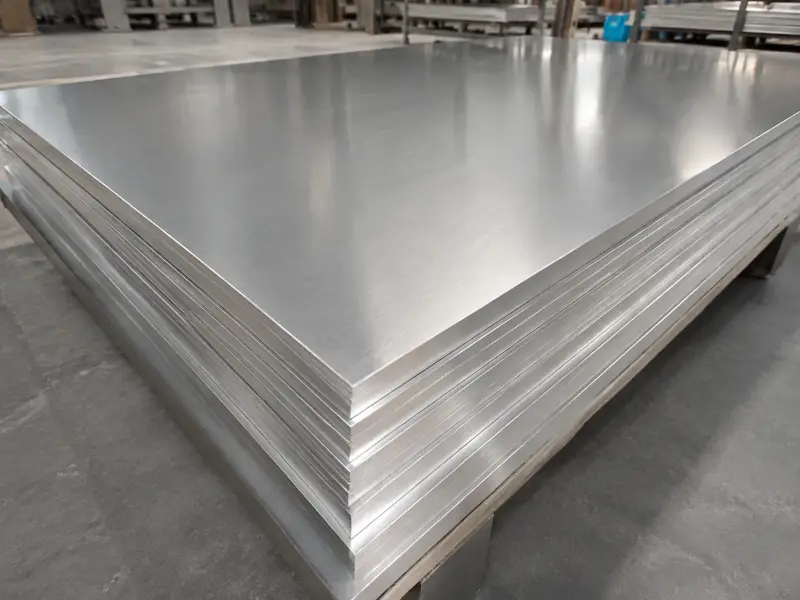
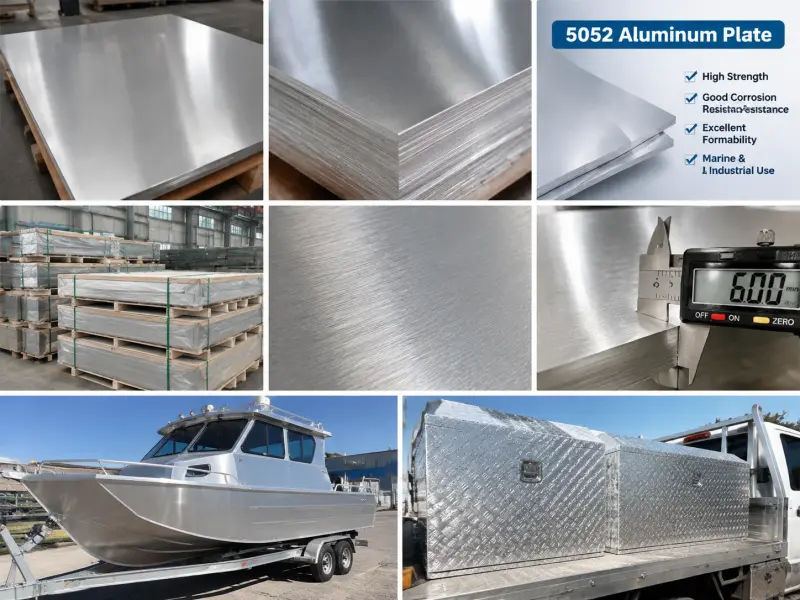
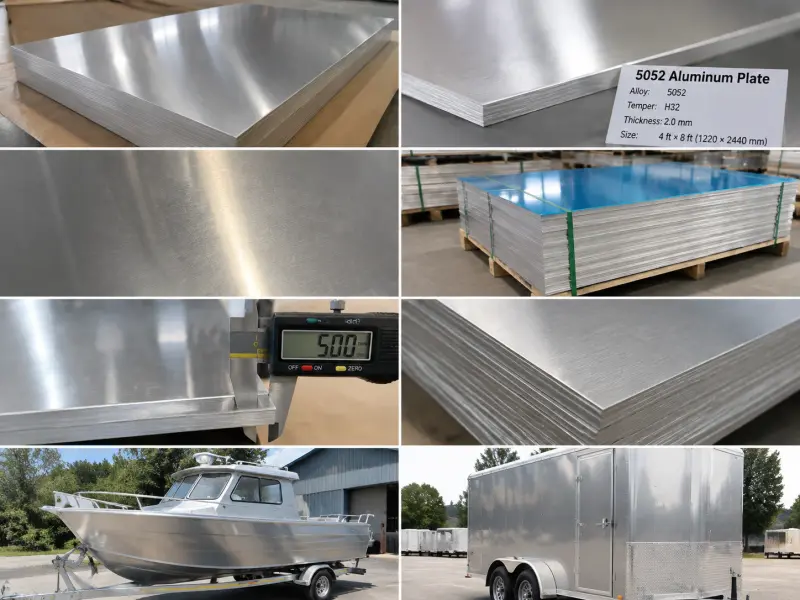
Flat Plate Stock
Compare surface condition and stock format.
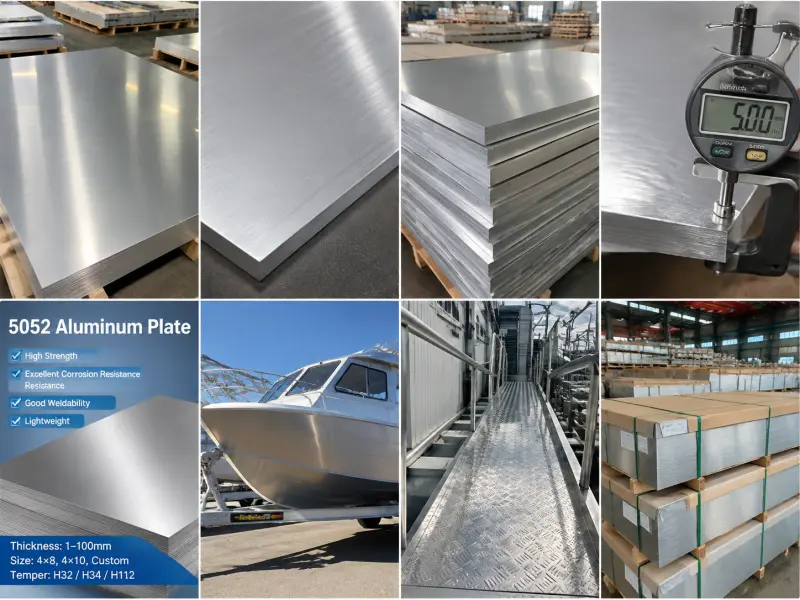
Inspection Details
Confirm thickness and edge requirements.
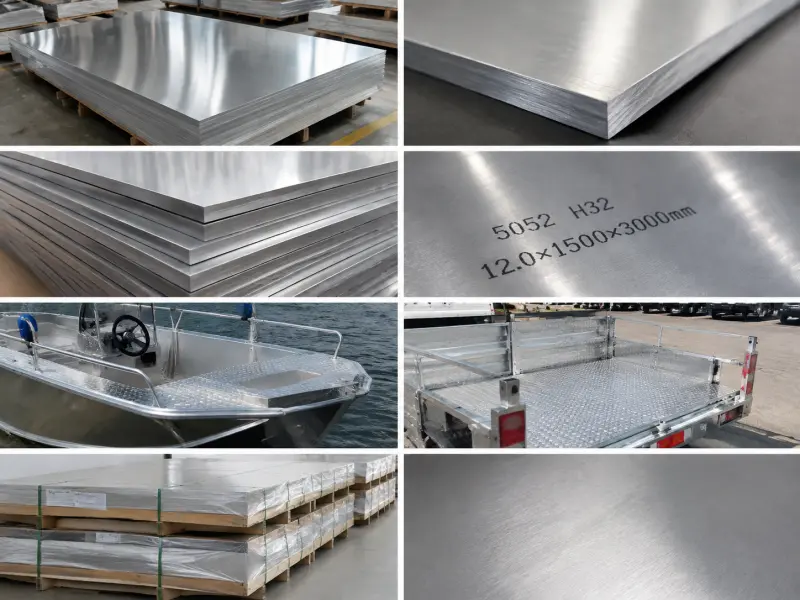
Fabrication Options
Match dimensions and product form to the drawing.
Product Types You Can Source
5052 plate is not one product. It comes in several forms. Each form suits a different job. The sections below describe the main types.
Standard Flat Plate
Flat plate is the most common form. It has a smooth surface and even thickness. It suits general fabrication, tanks, and structural work. Most buyers start with flat plate.
| Feature | Detail |
|---|---|
| Temper | H32 or H34 |
| Thickness | 6 mm to 30 mm |
| Surface | Mill finish |
| Use | General fabrication |
Marine Grade Plate
Marine plate is made for boats and ships. It must resist salt water and damp air. Many marine projects use 5052 because it resists pitting. Marine plate often uses H32 or H34 temper.
| Feature | Detail |
|---|---|
| Temper | H32 or H34 |
| Thickness | 6 mm to 20 mm |
| Surface | Mill or brushed |
| Use | Boat hulls, decks, and fittings |
Checkered and Tread Plate
Checkered plate has a raised pattern on one side. The pattern gives grip. It suits walkways, ramps, and truck beds. The pattern also hides scratches and dirt.
| Pattern | Thickness | Common Use |
|---|---|---|
| Diamond | 3 mm to 6 mm | Truck beds and trailers |
| Raised bar | 4 mm to 8 mm | Stairs and walkways |
| Fine tread | 3 mm to 5 mm | Ramps and floor panels |
Pre-Cut Blanks
Pre-cut blanks save time for shops. They arrive shaped to a set size. This reduces waste and cuts labor. Blanks suit repeat parts such as brackets and cover plates.
| Blank Type | Common Size | Thickness | Use |
|---|---|---|---|
| Square | 300 x 300 mm | 6 mm to 10 mm | Mounting plates |
| Round | 200 mm diameter | 8 mm to 12 mm | Flanges and discs |
| Rectangle | 400 x 600 mm | 6 mm to 15 mm | Brackets and frames |
Drilled and Machined Plate
Drilled plate has holes already placed. Machined plate has faces milled flat or edges cut to tight tolerances. Both forms save shop time. They also suit parts that need exact fit.
| Form | Feature | Use |
|---|---|---|
| Drilled | Set hole pattern | Bolt-on plates and covers |
| Machined | Flat, tight tolerance | Precision parts and bases |
| Edge-cut | Clean, square edges | Welded frames |
Bent and Formed Plate
Some buyers need plate bent into a shape. 5052 bends well, especially in O or H32 temper. Bent parts suit tanks, housings, and curved covers.
| Shape | Common Temper | Thickness | Use |
|---|---|---|---|
| Simple bend | H32 | 3 mm to 8 mm | Brackets |
| Curved panel | O or H32 | 3 mm to 6 mm | Covers and housings |
| Tank wall | H32 or H34 | 6 mm to 12 mm | Fuel and water tanks |
Application Areas
5052 plate fits many industries. Its salt resistance makes it a top choice for wet and harsh work.
- Marine: Boat hulls, decks, fuel tanks, and dock parts
- Transport: Truck beds, trailers, fuel tanks, and bus panels
- Chemical handling: Storage tanks and piping supports
- Construction: Roof panels, wall cladding, and handrails
- Machinery: Machine bases, guards, and covers
- Food and drink: Equipment panels that need easy cleaning
- Signs: Outdoor signs and sign bases
- Electronics: Enclosures and heat sinks
Marine and Boat Work
Boats face salt spray all year. 5052 resists this harsh environment well. Marine builders often use H32 or H34 temper. Thicker plate suits hulls, while thin plate suits decks and hatches.
Transport and Fuel Tanks
Trucks and trailers need light, strong panels. 5052 is a common choice for fuel tanks and truck beds. It resists corrosion from road salt and fuel vapors. Checkered plate adds grip for walkways.
Chemical and Water Storage
Tanks for water and some chemicals often use 5052. It handles many mild chemicals well. It also welds cleanly, which helps build sealed tanks. Ask your supplier about the right grade for your specific chemical.
Construction and Architecture
Builders use 5052 for roof panels, wall covers, and railings. It looks clean and stays strong over time. Brushed finishes suit visible parts.
Cutting, Welding, and Forming Tips
Good results depend on the right methods. 5052 is easy to work with, but it still needs care.
Cutting Methods
- Shearing: Good for thin plate up to about 6 mm
- Band saw: Good for medium and thick plate
- Plasma cutting: Fast for thick plate
- Waterjet: Clean cuts with no heat damage
- Laser cutting: Best for thin plate and fine detail
Welding Basics
5052 welds well with common methods. MIG and TIG are the most common choices. Use a filler wire that matches the alloy, such as 5356 or 5183. Clean the surface before welding. Oxide on the plate can cause weak welds.
| Welding Method | Plate Thickness | Notes |
|---|---|---|
| TIG | Up to about 10 mm | Clean welds, good control |
| MIG | 6 mm and up | Faster for thick plate |
| Friction stir | Thick plate | Strong, low distortion |
Welding Tips
- Clean the surface with a stainless brush
- Remove oil and dirt with a solvent
- Use the correct filler wire
- Preheat thick plate if your shop uses this step
- Check the weld for cracks and porosity
Bending and Forming
5052 bends well in O and H32 temper. Harder tempers need larger bend radii. Use a bend radius that is at least the plate thickness for H32. Check the mill data for your exact temper.
| Temper | Minimum Bend Radius (Approx.) |
|---|---|
| O | 0.5 times thickness |
| H32 | 1 times thickness |
| H34 | 1.5 times thickness |
| H36 | 2 times thickness |
Surface Care
Protect the surface during handling. Keep plates flat and dry. Use protective film on finished parts. Wipe away salt and dirt after use in marine settings.
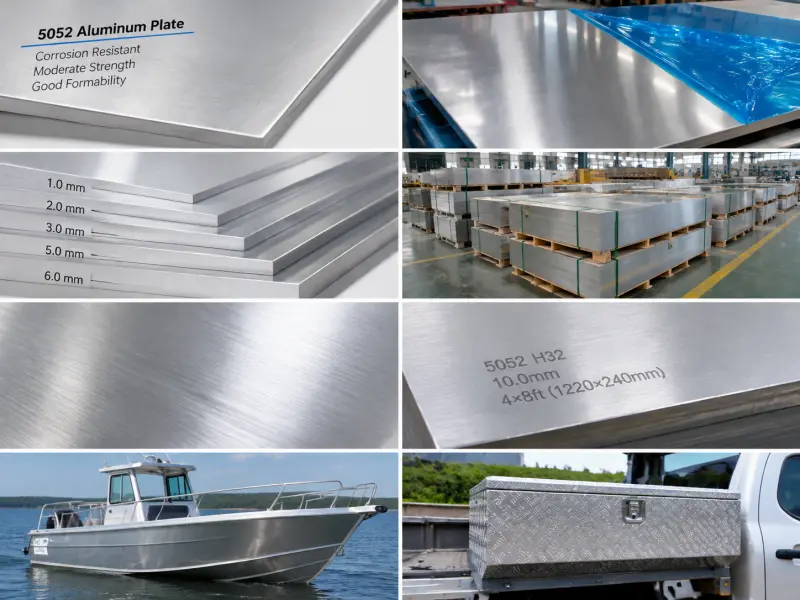
Surface & Packaging
Agree on surface protection and pallet packing before dispatch.
Order Specification
Confirm alloy, temper, dimensions, quantity and inspection documents.
Buying Guide: What to Check
A clear checklist helps you compare suppliers. It also reduces waste and costly returns.
| What to Check | Why It Matters |
|---|---|
| Alloy (5052) | Confirms the right corrosion and strength profile |
| Temper (H32, H34, or O) | Controls bending and strength |
| Thickness tolerance | Keeps parts fit and flat |
| Flatness | Affects welding and assembly |
| Surface quality | Prevents rework and weak spots |
| Mill certificate | Proves chemistry and mechanical values |
| Packaging | Protects the surface in transit |
| Minimum order | Helps plan costs |
| Lead time | Keeps your project on schedule |
Certificates and Test Reports
Ask for a mill test report with each order. It shows the chemistry and strength of your lot. For marine or pressure work, you may need extra certificates. Confirm these needs before ordering.
Ordering Samples
Samples help you test cutting, bending, and welding. Test the plate in your own shop before a large order. Check flatness, surface, and weld quality.
Packaging and Delivery
Plate is heavy. Ask for strong crates or wood skids. Use interleaf paper or film to protect the surface. Check the lift and loading needs before delivery day.
Common Problems and Fixes
Most problems come from poor handling or the wrong temper. The table below lists common issues.
| Problem | Likely Cause | Fix |
|---|---|---|
| Cracks in bends | Temper too hard or bend radius too tight | Use softer temper or larger radius |
| Weak welds | Oxide layer or wrong filler | Clean surface and use 5356 or 5183 |
| Warped plate | Uneven cooling or poor storage | Store flat and cut with care |
| Surface stains | Salt or dirt left on surface | Clean after use and wash with fresh water |
| Pitting | Long exposure to harsh chemicals | Choose a suitable coating or grade |
Frequently Asked Questions
What is 5052 aluminum plate used for?+
It is used in boats, fuel tanks, truck parts, signs, and building panels. Its salt resistance makes it a good choice for wet and outdoor work.
How strong is 5052 compared with 6061?+
6061 is stronger after heat treatment. 5052 is strong enough for most marine and fabrication jobs. It also resists corrosion better in salt air and bends more easily.
Which temper is best for welding?+
H32 and H34 are both good for welding. The softer O temper also welds well. Use a matching filler wire, such as 5356 or 5183.
Can 5052 plate be bent into curves?+
Yes. O and H32 bend well. Use a bend radius that suits your temper. Harder tempers need larger radii.
What thickness should I choose for a boat hull?+
Hull plate often uses 6 mm to 10 mm for small and mid-size boats. Thin deck panels may use 3 mm to 6 mm. Check the design rules for your boat type.
Is 5052 suitable for fuel tanks?+
Yes. It is a common choice for fuel tanks. It resists corrosion from fuel and road salt. Make sure the tank design follows the rules for your region.
Specify Your 5052 Aluminum Plate
Send the temper, thickness, width, length, quantity and destination. Include drawings and inspection requirements for custom parts.